

Artificial intelligence has been talked about as an idea of the future for a long time. Today, it works silently in the text we write, the music we listen to, the application we use and the design we see. Therefore, the real question is now "Will artificial intelligence enter our lives?" not; “What kind of life will we build with him?” question.
The speed of technology can be dizzying. But the future will not only be determined by faster machines. People's curiosity, ethical preferences, imagination and way of co-creation will be at least as effective as algorithms. Artificial intelligence, when used correctly, is not a replacement for humans; It can be a new beginning that expands the human capacity to think and produce.
Why has the future already begun?
Today, artificial intelligence can summarize an email, find patterns in complex data, make a visual idea visible in seconds, and suggest alternative solutions when developing software. These abilities alone do not tell the future; But it shows that our ways of working are starting to change radically.
In the past, the distance between a good idea and the first draft was long. Now this distance is getting shorter. A designer can quickly try different visual aspects, a musician can turn his emotion into a sound sketch before even entering the studio, an entrepreneur can see a working prototype of his idea earlier. Thus, the energy of the production process is directed towards the quality of the idea rather than technical obstacles.
The most powerful aspect of artificial intelligence is not that it thinks on behalf of humans; It invites people to think about more possibilities.
The role of man is not shrinking, it is changing
Every major technological transformation brings with it the same concern: "Will there be a need for humans from now on?" However, artificial intelligence is not an independent creator who automatically knows what he wants and has life experience. It processes the given context, establishes patterns and generates possibilities. It is still human to decide which possibility is meaningful, true and valuable.
In the new era, human contribution will be more visible in three areas:
- Intent: Identifying the real problem to be solved and asking the right question.
- Judgment: Choosing the one that suits the context, culture and purpose among the options produced.
- Responsibility: Taking ownership of the impact of the outcome on people, society and the environment.
In short, value comes not only from producing something; It will arise from knowing why it is produced. As technical production becomes easier, an original perspective, strong taste and a consistent story will become more valuable.
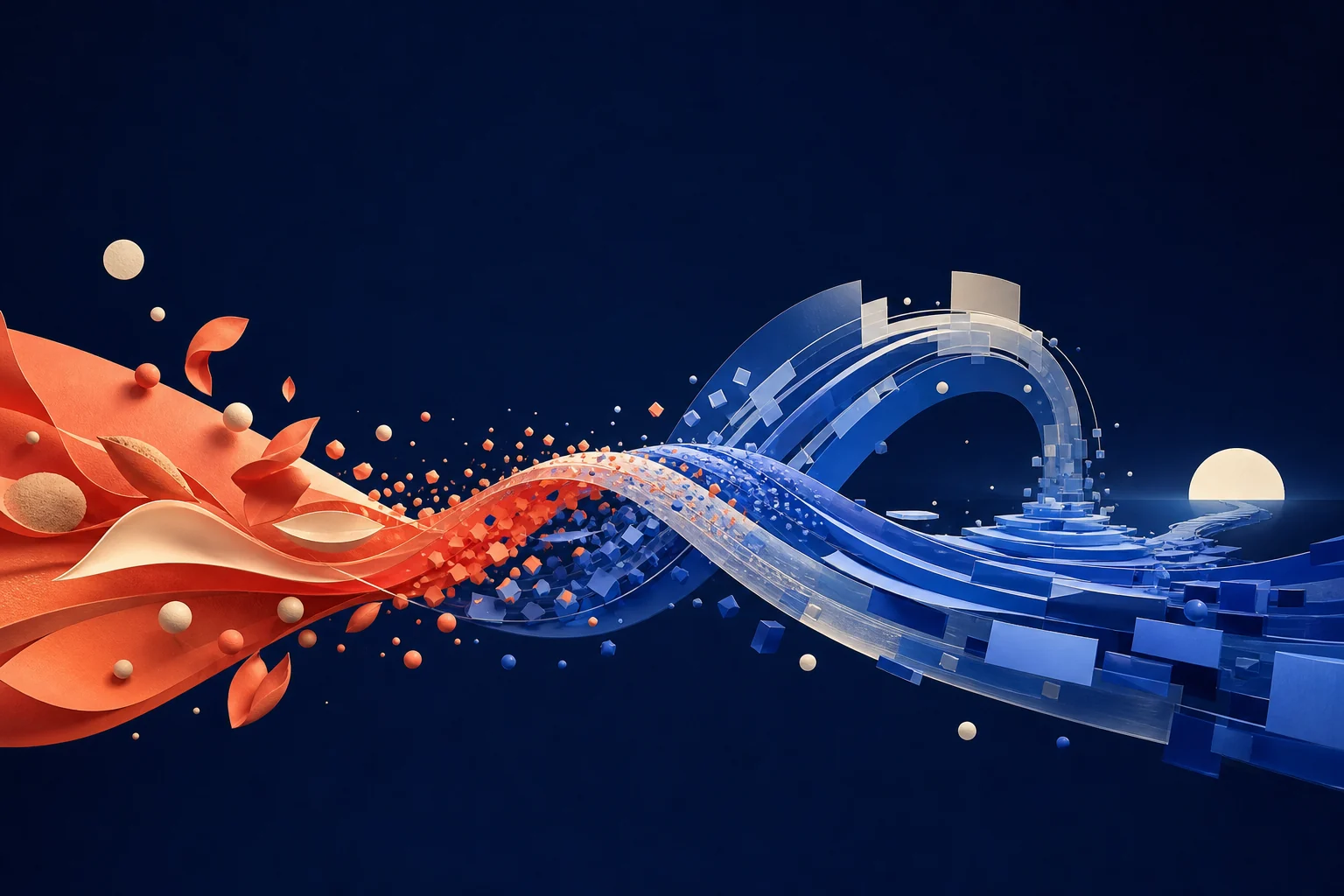
Design, music and software on the same table
One of the most exciting effects of artificial intelligence is that it thins the walls between different areas of production. Someone interested in visual design can now create sound worlds; Someone who produces music can experiment with moving images; Someone with a creative idea can design digital experiences that work without a deep software background.
I see artificial intelligence as a production partner that connects these disciplines. I use these tools to try new compositions while researching the visual identity of an idea, turn an emotion into music, develop text alternatives, or bring a software idea to prototype. However, at every stage, the human gaze determines the selection, arrangement and final touch.
This approach is quite different from the “one-button production” idea. Good result; It requires correct guidance, repeated attempts, critical evaluation and strong editing. Artificial intelligence speeds up the process, but it is the experience and perspective of the producer that creates the character.
A good future cannot be established without seeing the risks.
Being optimistic does not mean ignoring risks. Artificial intelligence systems can produce inaccurate information, repeat biases in data, and cause the proliferation of similar content. Topics such as protection of personal data, copyrights, transparency of resources and compensation for labor should be considered as carefully as the development of technology.
That's why a few simple questions are important in every production:
- Is the information I use accurate and verifiable?
- Does this result imitate someone else's work or identity without permission?
- Do I clearly state the role of artificial intelligence in the content I share, when necessary?
- Does the resulting work actually produce value, or is it just more content?
The reliable creators of the future are not just those who use tools well; There will be those who will bear the responsibility of these questions.
The most important competence of the new era: being able to learn
The AI tool we use today may change in a few years. Therefore, there is a more important competency than mastering a specific program by rote: continuing to learn by adapting to change.
Being curious, asking good questions, conducting small experiments, criticizing the results and turning what you have learned into a real project will be at the center of the work culture of the future. Field knowledge will not lose its importance either. On the contrary, a strong foundation in design, music, software, communication or whatever field we work in will be even more valuable in order to evaluate the options offered by artificial intelligence.
As tools change rapidly, being open to development becomes a professional reflex rather than a choice. What prepares us for the future is not knowing every new feature; Knowing how to learn when we encounter something we don't know.
What kind of future do we want?
Artificial intelligence will not write the future alone. The choices of those who develop it, use it, determine its rules, and monitor the results produced will shape this story. A faster but more superficial world is also possible; In a world where technology liberates people, makes creativity accessible and reduces barriers to good ideas.
I choose to believe in the second possibility. I see artificial intelligence not as an opponent to be feared or a perfect answer machine, but as a powerful tool that we can work with, knowing its limits. Future; Rather than a race between humans and machines, it may be a period in which humans open new areas of expression through technology.
In the end, it is not the name of the model we use that will differentiate us; It will be what problem we solve with that model, what emotion we convey and what kind of mark we leave on people's lives.
 01
01 02
02 03
03
Henüz yorum yok. İlk fikri sen bırak.